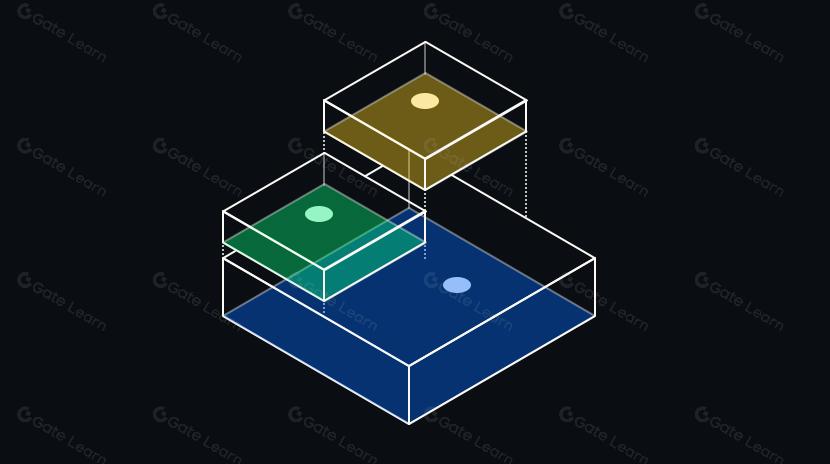
The Hyperliquid ecosystem map connects HyperCore execution, HyperEVM applications, HIP-3 builder-deployed markets, HYPE staking, ecosystem funding, and revenue-supported HYPE buybacks. HyperCore carries the high-frequency exchange state, HyperEVM hosts lending, liquidity, and consumer applications, and HIP-3 lets approved builders deploy their own perpetual markets.
2026-11-20 01:53:36
To issue RWA on Arbitrum, define the asset and legal structure, map investor eligibility and transfer restrictions, deploy audited token contracts, connect qualified custody and oracle data, establish stablecoin liquidity, build redemption and reporting workflows, complete security review, and launch with monitoring. Arbitrum supports each step through Ethereum-compatible contracts, low-cost execution, Orbit app-chains, and institutional DeFi infrastructure.
2026-11-17 07:47:07
Arbitrum RWA adoption is accelerating because Arbitrum combines Ethereum-grade settlement security with low-cost execution, Ethereum tooling, app-chain flexibility, and a growing set of institutional tokenization products. Arbitrum RWA adoption is accelerating because Arbitrum combines Ethereum-grade settlement security with low-cost execution, Ethereum tooling, app-chain flexibility, and a growing set of institutional tokenization products. Robinhood stock tokens, PayPal PYUSD, Circle Gateway, and RWA deployment platforms operate on Arbitrum, giving issuers a production environment for regulated real-world assets.
2026-11-17 07:47:00
As the launch of Base's native token is imminent, leading ecosystem project Zora has made several strategic moves, notably introducing a livestream feature that has generated market attention. This article examines Zora from four perspectives: product innovation, tokenomics, ecosystem status, and potential risks. It analyzes how Zora is evolving from an NFT platform to the primary platform for the creator economy on Base, and discusses the important role it may play in the forthcoming Base token distribution.
2026-11-10 08:09:04
As the Linea airdrop approaches, its economic model and ETH-first mechanism are drawing strong interest from the market. Leveraging a dual deflationary engine, native staking, and the reinvestment of its ecosystem fund, Linea is striving to become a value-enhancing extension for Ethereum, redefining the dynamics between L2 and L1.
2026-11-10 08:08:09
Although L2 plays an important role in innovation and economic advancement, over-reliance on L2 may weaken the network effect of Ethereum Layer 1 (L1). The article proposes the concept of ultrasonic Rollup, which is a native Rollup design that combines data availability, execution, and ordering, aiming to enhance rather than weaken Ethereum's network effect.
2026-11-10 08:06:47
This article comprehensively outlines the scalability paths of Web3 parallel computing, covering mainstream architectures such as Monad, MegaETH, Sui, and Solana. It reveals the key design concepts and development trends of the next generation of high-performance blockchains, from account-level and object-level to the Actor model.
2026-11-10 08:06:32
As L1 infrastructure becomes commoditized, the debate over the Fat protocol is giving way to the Fat application protocol. This report reveals why applications will dominate value capture, and how projects like Uniswap and Jupiter are reshaping the industry through independent chains and vertical integration.
2026-11-10 08:06:22
The article explores how Aztec uses zero-knowledge proof technology to achieve privacy protection, analyzing a new approach for balancing privacy and transparency in blockchain technology.
2026-11-10 08:06:20
PREDA (Parallel Relay Execution Distributed Architecture) is an innovative model designed to enhance blockchain performance and scalability. It achieves full parallelization of smart contract functions by breaking down the execution process of smart contracts into multiple steps that can be processed in parallel. These steps are executed asynchronously across different Ethereum Virtual Machine (EVM) instances, thereby maximizing the concurrency of a set of transactions.
2026-11-10 08:00:10
With giants like Paradigm, Uniswap, Kraken, and Sony successively launching Layer 2 solutions, competition in the Layer 2 sector has become increasingly intense. This article explores the narrative around new Layer 2s and analyzes the reasons behind the current battle among numerous chains.
2026-11-10 07:58:46
To connect to Elysium, add the Elysium network in a compatible EVM wallet with the published chain ID and RPC, fund HYPE on HyperEVM, then bridge HYPE 1:1 into Elysium as native gas before sending any application transactions.
2026-11-09 10:37:12
Elysium is a general-purpose, high-performance Layer 2 for Hyperliquid built by Kinetiq. It is an Arbitrum Orbit chain that settles to HyperEVM, uses HYPE as native gas, and targets roughly 100 ms blocks with a 300 Mgas/s execution goal for high-frequency DeFi workloads.
## Official Sources
- [What is Elysium](https://elysium.kinetiq.xyz/docs/what-is-elysium)
- [Connecting to Elysium](https://elysium.kinetiq.xyz/docs/connecting-to-elysium)
- [Security and data availability](https://elysium.kinetiq.xyz/docs/security-and-data-availability)
- [Elysium: A New Era for Hyperliquid](https://kinetiq.xyz/blog/elysium-hyperliquid-l2)
- [Kinetiq](https://kinetiq.xyz/)
2026-11-09 10:11:13
IOST is a blockchain project that has evolved from a high-performance public blockchain into a broader infrastructure ecosystem focused on real-world asset (RWA) tokenization, Layer 2 technology, and digital payment solutions. Its original network was designed to support decentralized applications through a Proof-of-Believability (PoB) consensus mechanism. In 2025, the project introduced IOST 3.0, marking a new stage in its technical and ecosystem development.
2026-11-05 09:34:17
Starknet is an Ethereum Layer 2 network designed to scale blockchain applications by processing transactions outside Ethereum mainnet and submitting cryptographic validity proofs for verification. It uses STARK proofs and Cairo, a programming language designed for verifiable computation and smart contract development. These technologies form the foundation of Starknet’s approach to transaction execution and settlement.
2026-11-04 08:16:23