Square
Following
Hot
News
Notifications
Profile

 KOSPI

77.1K Views277 posts
Is the Korean Retail Leverage Cycle Coming to an End?

The intense period of leveraged trading by South Korean retail investors is, according to some indicators, coming to an end. Key data shows the margin call rate has fallen to a 5-day average of 1.82%, returning to historical levels after the sharp fluctuations at the beginning of the year. This rate measures the share of liquidation risk within the total loan portfolio.

Calming in Leveraged Products

There are two main indicators of this change. First, retail investor inflows into leveraged ETFs have fallen from a peak of approximately $1
post-image
US500+1.05%
NAS100+2.03%
  • 385
  • 3
South Korea’s stock market margin balance has dropped to its lowest level since April.

According to recent data, the total margin debt in South Korea’s stock market continues to decline, reaching the lowest point in nearly four months. This significant drop reflects a clear reduction in leveraged trading activity as investors adopt a more cautious approach amid global economic uncertainties and domestic market volatility.

Lower margin balances often indicate waning retail investor confidence and a decreased appetite for high-risk positions. While this can be viewed as a sign of deleveraging
Gate_Square
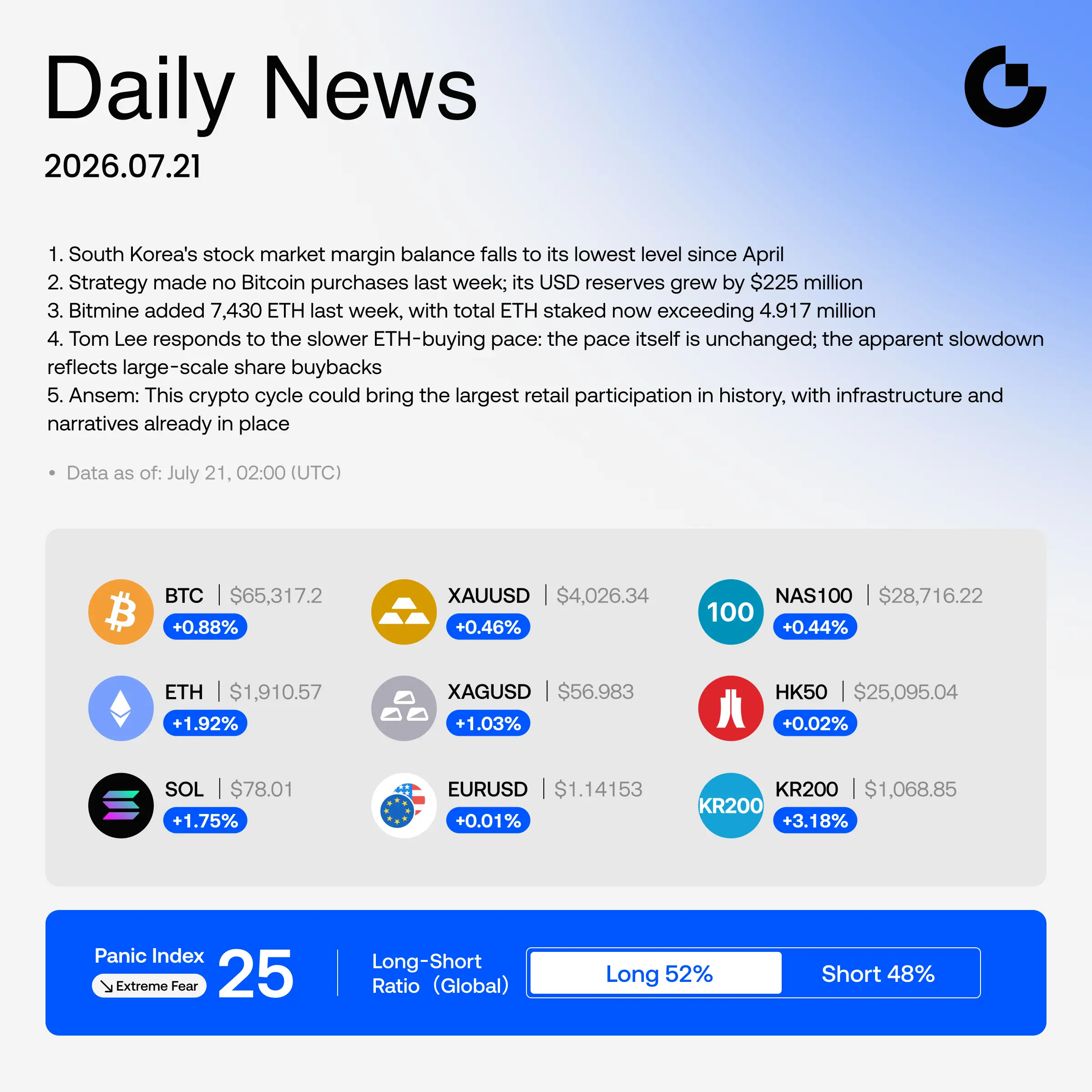
📰 Gate Square Daily | July 21
Today’s crypto market highlights, key news, and capital flows — all in one infographic 👇
repost-content-media
  • 25
#KOSPIExtendsLossesTo3%
South Korean Stocks Under Pressure: Chip Selloff, Forced Deleveraging, and Rising Volatility Shake the KOSPI

South Korea's equity market remained under heavy pressure as the KOSPI extended its decline, with semiconductor giants leading another broad-based selloff. What initially appeared to be a reaction to weaker-than-expected guidance from the global memory industry has evolved into a much larger story driven by leverage, forced liquidations, and deteriorating investor sentiment.

The sharp decline in SK Hynix and Samsung Electronics once again highlighted how heavi
  • 15
#KOSPIFalls3.17%AtOpen 📉🇰🇷 | South Korea’s Stock Market Opens Under Pressure

South Korea’s stock market started Monday, October 19, on a turbulent note as renewed concerns over AI investment returns rattled technology stocks.

📊 Opening market snapshot

- KOSPI opening level: 5,488.41
- Opening decline: 3.17%
- Points lost: 179.64

The sell-off followed a sharp decline in US technology shares, with investors questioning whether massive spending on artificial intelligence infrastructure will deliver sufficient returns.

🔍 Why the drop matters

💻 Semi
  • 16
#SKHynixSurges25%
SK Hynix jumps 25% as KOSPI Posts Its Single-Day Gain

South Korea’s KOSPI had an extraordinary day rising more than 15% during the day. The biggest one-day increase in the index’s history. This movement was driven by the memory sector. SK Hynix went up 25%. Samsung Electronics went up more than 20%. The size of the rise made both traders and regulators respond quickly.

The Size of the Move

A 15% or more increase in the index in one day is not common in any market. When it is led by the two names in semiconductors the signal is strong and specific. SK Hynixs 25% rise and S
  • 13
#ShareWeekly #SKHynix #WCTCS9

South Korea's Semiconductor Rally Faces a Reality Check: Is the AI Stock Recovery Strong Enough to Last?

South Korea's semiconductor market is once again attracting global investor attention. SK Hynix and Samsung Electronics remain at the center of the AI investment story, while movements in the KOSPI are reflecting changing expectations about the future of the global technology sector.

The latest rebound initially created optimism that semiconductor stocks might finally be recovering from their recent correction. SK Hynix climbed around 4.8%, while the KOSPI
  • 13
  • 4
#Gate事件合约晒单挑战

KOSPI Reclaims 7,000 Level for First Time in 33 Trading Days on AI Momentum

KOSPI is back above the psychologically important 7,000 level. The index closed at 7,051.64 today, gaining 1.40% and reclaiming 7,000 for the first time in 33 trading sessions. The move is another sign that AI-related semiconductor strength is once again becoming a major driver of Korean equities.

Market View

The biggest signal behind the move is the continued strength of South Korea's memory-chip sector. SK Hynix rose 3.51% to 1.856 million won, adding fresh momentum to the index as investors contin
post-image
SK Hynix+5.41%
  • 10
  • 2
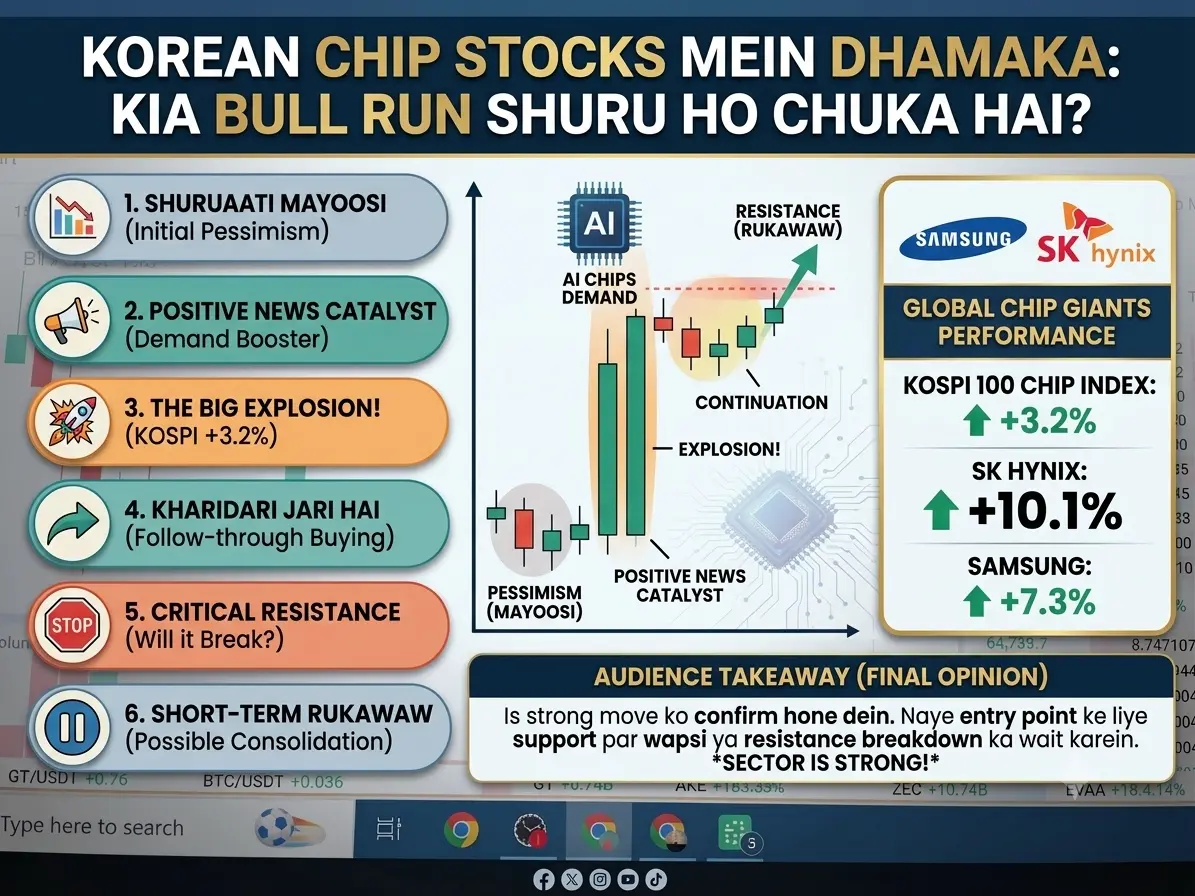
Korean Chip Stocks Explosion: Is the Semiconductor Bull Run Officially Here?
The global financial markets are buzzing with excitement as South Korea’s semiconductor sector witnesses a massive, sudden surge.

A market that looked highly uncertain and pessimistic just days ago has completely flipped the script with an incredible "bullish explosion."

The KOSPI 100 Chip Index jumped over 3%, led by eye-watering gains from global giants: SK Hynix skyrocketed by over 10%, while Samsung Electronics surged over 7%.

If you are tracking the markets, here is a complete 6-step breakdown of exactly what
post-image
  • 8
  • 1
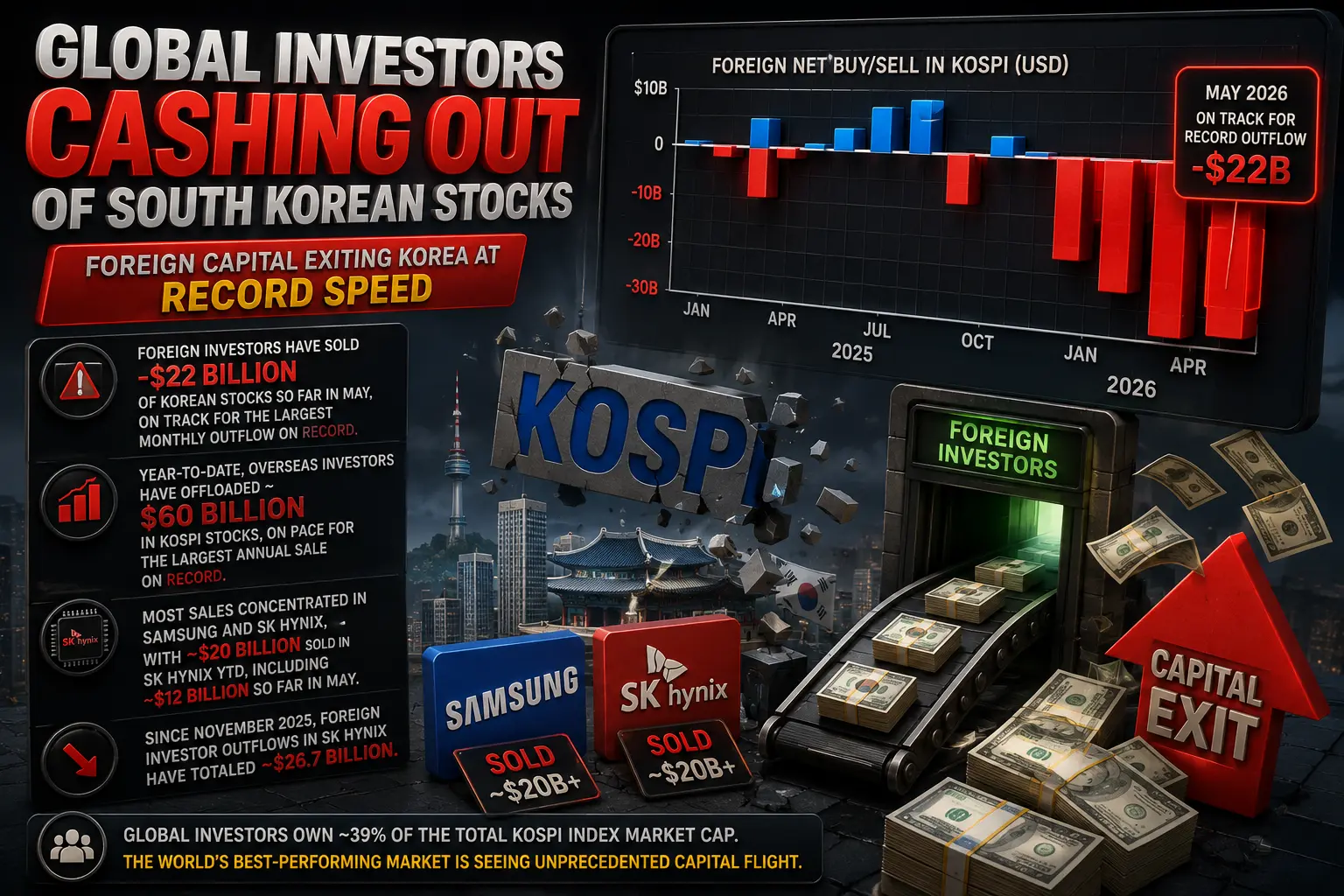
𝐆𝐋𝐎𝐁𝐀𝐋 𝐂𝐀𝐏𝐈𝐓𝐀𝐋 𝐈𝐒 𝐅𝐋𝐄𝐄𝐈𝐍𝐆 𝐒𝐎𝐔𝐓𝐇 𝐊𝐎𝐑𝐄𝐀 🚨

Foreign investors are pulling money out of South Korean equities at an unprecedented pace.

📊 Key numbers:

🔶 -$22B sold in May alone
🔶 ~$60B sold year-to-date
🔶 Largest monthly outflow on record if current pace continues
🔶 Foreign investors own ~39% of KOSPI market cap

The biggest pressure points:

📉 SK Hynix: ~$20B sold YTD
📉 Samsung: Heavy institutional selling pressure
📉 SK Hynix outflows since Nov 2025: ~$26.7B

Why this matters:

Capital movement often acts as an early signal.

When global money starts lea
post-image
  • 7
  • 5
🇰🇷 𝗞𝗢𝗦𝗣𝗜 𝗜𝗡 𝗙𝗢𝗖𝗨𝗦: 𝗖𝗛𝗜𝗣 𝗦𝗧𝗢𝗖𝗞𝗦 𝗟𝗘𝗔𝗗 𝗧𝗛𝗘 𝗪𝗔𝗬
South Korea's KOSPI market remains closely connected to semiconductor performance and investor flows.

Chip leaders can influence the broader index, but sustainable market strength requires participation from other sectors too.

Investors are watching foreign capital flows, semiconductor demand, and broader market participation.
#ShareWeekly
#KOSPI #SemiconductorStocks
  • 5
Load More